Tuesday, September 25, 2007

John Roberts: Restrained Judicial Conservative or Conservative Judicial Activist


Today, the Columbia ACS and Federalist Society hosted a conversation between Emily Bazelon (Senior Editor of slate.com) and M. Edward Whelan III (President of the Ethics and Public Policy Center) focusing on what to expect from the Roberts Court.

Mr. Whelan opened by noting his initial uncertainty as to Chief Justice Robert's attitudes, and then declared his satisfaction with the Chief Justice thus far. Interestingly, Mr. Whelan defended the term "judicial activism," noting it is inherently apolitical, but involves the overriding of political decision-making. He also noted that judges can affect similar error through "judicial passivism" in refusing to enforce politically-created rights. Further, Mr. Whelan distinguished judicial restraint from stare decisis because judicial restraint involves deference to the political branches. Returning to Chief Justice Roberts in conclusion, Mr. Whelan expressed his approval.

Ms. Bazelon dove right into an analysis of Chief Justice Roberts emphasis on unanimity in his first term. Moving into the recently elapsed term, Justice Kennedy's role in the numerous 5-4 decisions places him, and rather than Chief Justice Roberts, as the driving mind on the Court. This leaves Chief Justice Robert's role as one of timing and pacing. Ms. Bazelon pointed to a deeper understanding of restraint, noting the Justice Scalia's frequent criticisms of his Chief for "faux judicial modesty." Robert's emphasis on "modesty" bespeaks a preference for incremental change in the Court's decisions and calls for a delicate respect for precedent. Returning to the issue of pacing and timing, Ms. Bazelon pointed out the conservatives on the Court are just younger than the liberals and thus have time on the court to be patient and can build a number of decisions to cut away at important precedents. She asserted that Chief Justice Roberts will ultimately be an activist judge because he will drive the law toward an end-state that he desires.

Professor Peter Strauss, our moderator, opened the question period with a detailed query as to the current Court's approach toward the rule of law and respect to precedents in the context of a "common law" statute. What ensued was a wide-ranging and considered discussion of a number of jurisprudential points. Student questions focused on the terminology and evolved-meaning of the term "judicial activism," and the interpersonal dynamics among the Justices on the Court.

In the midst of answering a question, Ms. Bazelon expressed her anxiety in relying upon Justice Kennedy for her hopes for the court. "Me, too," enjoined Mr. Whelan. Regardless of their position on the alleged activism of Chief Justice Roberts, both speakers agree that Justice Kennedy is the linchpin of the Court and it is that dynamic which will be the prime driver of the Court in the near future.


Columbia ACS would like to thank Emily Bazelon, Edward Whelan, and Professor Peter Strauss for joining us today and offering their important and interesting remarks.

Labels: , ,

Monday, June 11, 2007

Love's Anniversary

Tomorrow is the 40th anniversary of Loving v. Virginia, the 9-0 SCOTUS decision that eliminated anti-miscegenation laws within the United States. NPR has a remembrance of this opinion, the people behind it, and the status of interracial relationships in America today.

Labels: ,

Tuesday, April 03, 2007

SCOTUS Haiku with Professor Michael Dorf

A few months back, we twisted Professor Dorf's arm until he agreed to generate a haiku or two in quick response to notable SCOTUS opinions. His first haiku concerns yesterday's Massachusetts v. EPA (.pdf link):
The Earth gets hotter.
Massachusetts can complain.
EPA comply.

Labels: , ,

Monday, April 02, 2007

Climate Change, Public Goods, and Standing

DISCLAIMER: The following represents the uninformed reaction of a CLS 1L, utterly befuddled by constitutional law and lacking anything approaching the appropriate level of background knowledge or research. Although when has insufficient knowledge or research ever hindered anyone from posting something on the internet? So here we go.

     Climate change is a different kind of litigation. Legal scholars examined it through the lens of traditional causes of action (notably Professor Merrill’s Global Warming as Public Nuisance) and found it a problematic fit. The inability to project climate change into a conventional law suit derives primarily from the fact that a stable climate is not a private right that may be infringed upon. A stable climate is a public good.
     Economists define "public good," as anything with two main characteristics: public goods are nonrival in consumption and nonexcludable. The benefits of a stable climate are enjoyed by all of us simultaneously, though perhaps to varying degrees. A stable climate is nonexcludable in that those who pay for its maintenance cannot withhold the benefits of a preserved planet from those who shirk their contribution. The global climate is a public good, and the definitive characteristics of public goods are at odds with the traditional requirements for standing.
     Chief Justice Roberts rightly critiques any claim of the petitioners to conventional standing. The demand that a plaintiff’s injury be “particularized” and different in kind (as opposed to in degree) from others suffering due to the defendants’ conduct is clearly at odds with the global nature of climate change. The requirement of redressibility demands that the court be able to alleviate the injury suffered by the plaintiff through forcing the defendant to do something or pay some amount in damages. Any amelioration of climate change affected by an agency regulation on automobile emissions would be enjoyed by everyone world-wide. Certainly not a bad thing, but because the public good of climactic stability cannot be partitioned: the court cannot direct the benefits from reduced carbon dioxide emissions. The traditional requirements of standing cannot be neatly applied to an injury to a public good. This sends Justice Stevens upon a jurisprudential obstacle course in an attempt to draw standing from provisions of the Clean Air Act and case law dealing with procedural rights conferred by Congress. In that task, Stevens succeeds admirably, upon my reading at least.
     Chief Justice Roberts assuages the fears of environmentalists and rational actors alike by assuring us all that the political branches are an apt and appropriate forum for dealing with climate change. There are two practical problems with labeling climate change a “political question” and booting these petitioners out of court. First, environmental policy in general and climate change legislation in particular, suffers from an utter and acute failure of our political system. Presenting a classic problem of collective action, the beneficiaries of a stable climate are diffuse, unorganized, and susceptible to free-rider problems. Opponents of climate change regulation are, on the contrary, exceptionally well-organized, well-funded, and – until recently – highly motivated to fight regulatory change tooth and nail. In a very real sense, a Congress dependent upon campaign contributions is absolutely institutionally incompetent to deal with the problem of climate change in an independent and effective manner.
     While our adversarial judicial system may be equally ill-suited to adjudicate threats to public goods, the court is armed with an immutable weapon. The Supreme Court may, as it did yesterday, send a clear message to the “political branches” and their delegates in administrative agencies. The Court can say, in effect: “while we cannot complete the political tasks before you, we can, we must, and we do demand that you face common challenges rather than obfuscate them.” If the EPA, in response to the Court’s decision, or Congress, to supersede independent agency action pursuant to the decision, effectively addresses climate change, then the court will have redressed to the petitioners’ injuries. That is not a dismissive “political question” opinion. That is one co-equal branch checking another. That is the judiciary providing relief to the injured party before it. Though it faces an unfamiliar type of problem, that is the judiciary resolving a controversy. That is the role of the Court.

Labels: ,

Environmental Roll Call in Massachusetts vs. EPA?

Nearly half the states joined the landmark Massachusetts v. EPA (.pdf link), decided today by the Supreme Court.

The plaintiff side featured Massachusetts, California, Connecticut, Illinois, Maine, New Jersey, New Mexico, New York, Oregon, Rhode Island, Vermont, and Washington.

Amici curiae supporting the EPA were Alaska, Idaho, Indiana, Kansas, Michigan, Nebraska, North Dakota, Ohio, South Dakota, Texas, and Utah.

Labels: ,

Sunday, March 04, 2007

“A Separate Society”

Judicial deference, separation of powers, and Harrison Ford

On the bus ride to Boston for the Don’t Ask Don’t Tell conference hosted by HLS Lambda, I was forcibly treated to Harrison Ford’s invigorating defense of the Constitution in Clear and Present Danger. The movie was remarkably apt for the occasion, and two spot-on moments of melodrama managed to sneak in between the bullets and the bombs. When Harrison Ford (aka Dr. Jack Ryan, acting CIA deputy director of intelligence) first discovers a miniature undeclared war in Colombia authorized by the President, his boss tells him, “You took an oath…I don't mean the President. You gave your word to his boss: you gave your word to the people of the United States.” At the end of the movie, Ford leaves the President in the Oval Office with a look of utter scorn and testifies for the Senate Intelligence committee, apparently the arbiters of justice in the Tom Clancy world.

So what happens when the political branches are more or less united? Is it the place of the courts to question the judgment of the elected representatives of the people over the constitutionality of their policies? The answer is always and emphatically yes. Don’t Ask Don’t Tell is no exception, and as the conference panelists made clear, the Supreme Court needs to apply strict scrutiny to this discriminatory policy.

Professor Tim Bakken outlined the usual legal justifications for judicial deference to the judgment of Congress and the President:
  • a textual argument for granting the political branches power and authority, especially when they are in concurrence,

  • an argument of standard deference to Congressional fact-finding,

  • and an argument for deference to military findings and decisions as the expert in the field.
However, none of the legal justifications are the true reasons for Don’t Ask Don’t Tell because they reference the argument that DADT is necessary to preserve unit cohesion and military morale, an argument so flimsy even the Defense Department has backed away from it in recent years. Former service members told emotional stories explaining that rather than improving cohesion and morale, DADT caused harm by making them feel unwelcome and dishonorable. Professor Laurence Tribe encapsulated the crucial problem with DADT: it is based solely on the military’s discomfort with homosexuality. Discomfort is not a legal or constitutional justification.

Despite the current tendency towards judicial deference with regards to Don’t Ask Don’t Tell, the Supreme Court still has the power to act. As several of the panelists emphasized, deference does not equal abdication. The Court has deferred to military judgments on the importance of military interests and values, but DADT clearly does not fall within the logical scope of deference to the military. Even with judicial deference to Congress and the President, the constitutional standard of strict scrutiny does not change. That means the Court must find a compelling government interest which can only be served by DADT. The stated compelling interest and the “tailoring” or fit of DADT are both highly questionable.

Stuart Delery, currently representing a group of discharged service members in Cook v. Gates, is championing the argument that judicial deference operates within the Constitution, not as a replacement. Likewise, the military must operate within the limits of the Constitution. As Professor Tribe thundered into his microphone, the military is not a “Constitutional blackhole.”

Labels: , ,

Thursday, February 08, 2007

After the Gavel: Anna Nicole Smith & Other Star-Crossed Litigants

In law school, no case receives more than an hour's attention – Marbury v. Madison? Brown v. Board? Roe v. Wade? The Steel Seizure Case? Each gets an hour, tops. As law students hop from case to case, they generally leave each case with a sense of permanence: The matter between the parties is resolved. The issue is put to rest. Next case.

Anna Nicole Smith's sudden and tragic passing today highlights, the lives of the litigants go on after their famous day in court concludes. As we skip around the law, we generally do so unaware that the parties to a well-known case might not have lived happily ever once they left the courthouse.

As Adam notes elsewhere in this blog, it is with sadness that we learn of Ms. Smith's fate; however, she is not the first litigant to die soon after a major court victory or defeat. It's sad but unsurprising when a gravely injured litigant dies soon after their day in court. It's altogether different when a seemingly healthy party dies shortly after the final gavel.

Anna Nicole Smith: An icon of popular culture, Ms. Smith was one of the most immediately recognized and well-known Americans; however, she only gained the professional attention of the legal community through the protracted legal battle over her late husband's estate — a battle ultimately leading to her SCOTUS victory in Marshall v. Marshall, 126 S.Ct. 1735 (2006).

In something of an ironic twist of fate, Ms. Smith is predeceased by E. Pierce Marshall, the named defendant in Marshall v. Marshall and son of Smith's husband J. Howard Marshall II. Mr. Marshall died of an infection on June 20, 2006, less than two months after losing at the Supreme Court.


Tyrone Garner: Although Mr. Garner's name is not immediately recognizable to most law students, his legacy as co-plaintiff in Lawrence v. Texas, 539 U.S. 558 (2003), represents a monumental leap forward for gay rights in the United States. Unfortunately, Mr. Garner's chance to relish this powerful victory was short lived, and he died of meningitis on September 12, 2006.


Richard Loving: Although Richard and Mildred Loving's successful battle against Virginia's ban on interracial marriage in Loving v. Virginia, 388 U.S. 1 (1967), would have a profound effect on marriage in America, their own marriage would be tragically cut short. On June 29, 1975, Richard, Mildred, and Mildred's sister Garnet were traveling by car when they were hit by a drunk driver, killing Richard. Richard Loving was 41.


Dred Scott: In the infamous Dred Scott v. Sandford, 60 U.S. (19 How.) 393 (1856), the Supreme Court determined that slaves could not be citizens of the United States: a decision that helped provoke a civil war, led directly to the Civil Rights Act of 1866, and ultimately to the Fourteenth Amendment to the U.S. Constitution.

For better or worse, Dred Scott experienced none of these subsequent developments. Having been granted his freedom by his eventual owners in early 1858, Scott died of tuberculosis on September 17, 1858.

Labels: ,

Monday, January 29, 2007

Moot Court: The Bush Administration's Non-Litigation Strategy

The Bush administration has made a habit of pushing the boundaries of the law and then retreating slightly before meaningful legal challenges to its actions can be mounted. Most recently, the administration announced that it has submitted the controversial NSA domestic surveillance program to the jurisdiction of the FISA court. The announcement was made, coincidentally, the day before Attorney General Gonzales was due to testify before the Senate Judiciary Committee. Another notable example of this practice was the abrupt change in the government’s case against Jose Padilla—in 2005, he went from enemy combatant to garden-variety criminal defendant as the Supreme Court was considering whether to hear a challenge to the legality of his detention. A 2002 article by L.A. Times reporter David Savage examines a less high-profile example. Rounding up and detaining Muslim immigrants in the wake of 9/11, “[t]he government’s basic strategy: If an arrest is challenged, the detainee is simply deported.”

So the Bush administration is the legal equivalent of the kid who sweeps the chessboard off the table when you capture his queen—if we can’t finish the game, then I didn’t lose. In the current issue of Vanity Fair, editor Graydon Carter reveals that the President is actually famous among his friends for tactics like this. Apparently the young W. had a wily strategy when his golf game went awry at his mother’s Houston country club: he would just shout expletives until Barbara sent him to wait in the car. I assume he didn’t regularly make it to the 18th hole. If you beat the President in one game, you can bet you're going best two out of three, three for five, or whatever it takes.

This gives us an interesting glimpse of the way our President’s psychology affects public policy (cf. Oedipus/Iraq). But the emergent pattern of avoiding meaningful judicial review suggests a more-or-less comprehensive strategy, rather than simply a childish aversion to losing. Slate’s Dahlia Lithwick has recently argued that many of the administration’s legal maneuvers have been aimed primarily at expanding executive power for its own sake. Nina Totenberg of NPR reports that the real reason the administration kept Padilla’s case out of the Supreme Court was that “key players in the Defense Department and in Vice President Cheney's office insisted that the power to detain Americans as enemy combatants had to be preserved.”

What we are seeing, then, is a distinct strategy with distinct goals. And it is problematic for at least two reasons. First, the non-litigation strategy obfuscates legal and political issues in the public eye. For example, the L.A. Times headline on the NSA wiretap story was “U.S. ceases warrantless spy operation.” Whether that statement is technically accurate is debatable; that it fails to capture the import of the administration’s maneuver is not. By avoiding litigation, the administration also avoids substantial fact-finding and virtually any obligation to tell the truth. Say what you will about judicial deference to executive power, but the national media is a softer forum than any federal court.

Second, the non-litigation strategy may actually have legal effects. By taking two steps forward and one step back, the administration doesn’t set any favorable legal precedent for itself, but it also avoids unfavorable precedent. Make no mistake--despite submitting the NSA program to the FISA court, the administration can maintain that it was good and legal all along. And by continuing questionable practices just under the legal radar, the administration may generate a patina of legitimacy—the quasi-legal justification of established practice. A court may be more deferential in reviewing an “established” policy than it would in hearing a fresh controversy.

The Bush administration defines a win as anything that is not a clear loss. In the legal realm this means that the administration believes its claims to power are justified so long as they are not definitively repudiated in court—and that can’t happen if they just keep the issue out of the courtroom. We also see the results of this idiosyncratic definition of victory in our Iraq policy, but that’s a subject for another day.

So I’m calling shenanigans on Team Bush. I say it’s time to lawyer up and see who is right about executive power, civil liberties, maybe even basic diction (would a court enjoin the use of the non-word “nucular”?) Ultimately, what’s at stake is not only the legality of specific policies, but the structure of legal discourse. Justification matters, and Fox News doesn’t provide an adequate forum for the sort of inquiry that the American tradition demands. Maybe I’m naïve, but it seems to me that if you can’t convince a court that what you’re doing is legal, then maybe you shouldn’t be doing it. And seriously, if you can’t win in the Roberts court, maybe it’s time to hang it up.

Labels: ,

Wednesday, January 24, 2007

A Toast to the American Constitution Society, the Federalist Society, and the Agreed-upon Constitution

By popular demand, here's the toast from the Columbia Law School's ConLaw Mixer, held on January 23, 2007. The event was jointly hosted by the local chapters of the American Constitution Society, the Federalist Society, and the Constitution Law faculty here at Columbia.

When ACS President Jon Sherman asked me to say a few words for this event, I initially thought I’d focus on the differences in how the American Constitution Society and the Federalist Society approach the Constitution.

I mean, every ACS member knows that the members of the Federalist Society look longingly at the days before pasteurization — that they fancy themselves as yeoman farmers on the New Jersey frontier where they dream of a world in which interchangeable parts will someday be a reality.

Similarly, every FedSoc member knows that when the members of the American Constitution Society hear someone talking about "penumbras formed by emanations," they promptly instruct the bartender that they’ll have what that guy’s having.

. . . but these differences are minor. Today, let’s celebrate the similarities — of which there are many. I’ve spent the past couple days pouring over this document, locating areas of significant agreement. I’ve found three areas of broad agreement about the Constitution. Interpretations upon which we can all agree, areas that we can all toast.


AREA #1: We agree on the many of the powers assigned either to the states or the various branches of our federal government.

What does this mean?

For the States, we shall not rest until states stop granting Letters of Marque and Reprisal and until they stop granting Titles of Nobility. We insist they settle their past debts using gold or silver.

For the Congress, we demand that it not shirk its duty to establish post Roads, to erect needful Buildings in D.C., and — as stated in Article 1, Section 5, clause 2 and reiterated the 20th Amendment — that it meet at least once every year.

For the Judiciary, we insist it remain vigilant to the needs of justice, that it insure no Attainder of Treason work Corruption of Blood, and that no one shall not be convicted of Treason without a rigorous trial consisting of at least 2 witness presenting evidence against her.

Most importantly, we ask that the judiciary fully enforce the 11th Amendment, whether that amendment actually means what it says . . . or whether actually every word of that amendment means the exact opposite of what it appears to mean.

Finally, concerning scope and appropriate exercise of Executive power, we… you know what, let’s just move on to Area #2.


AREA #2: I know I speak for everyone in this room when I say we supports the passage of the original 1st Amendment — the Congressional Apportionment Amendment.


As many of you know, on September 25, 1789 the 1st Congress introduced 12 — not 10 — amendments to the states as the Bill of Rights.

The original 2nd Amendment — barring Congress from granting itself immediately effective pay raises — became the 27th Amendment on May 20, 1992. However, the original 1st Amendment was only ratified by 11 states — 2 shy of passage at the time. Since Coleman v. Miller makes clear that all amendments are considered pending before the state indefinitely unless Congress establishes a deadline within which the states must act, only 27 states are now needed to ratify this amendment for its passage. Hey 27 states, pass the original 1st Amendment.

If passed, the Congressional Apportionment Amendment would establish guidelines for the size of the House of Representatives. The Amendment’s math is a little hazy, but it ends with this important instruction: "there shall not be . . . more than one Representative for every 50,000 persons."

With a present US population of more than 300 million people, this introduces the possibility of a 6,000-member House of Representatives. I know I speak for everyone here when I say that if there’s one thing that the august body of the House needs to be truly effective, it’s to have 5,565 members added to its ranks.


In closing, Area #3 is really a pledge:

AREA #3: We pledge from this day forth that we shall write like the authors of our Constitution.

Not only shall we employ capitalization seemingly at random and use either British, tortured, or inconsistent spelling whenever possible, but — like the Constitution’s signatories — we shall sign our name to documents using absurd abbreviations.

I mean, why grace the document with your full name — it’s only a Constitution? These people, these founders, signed the Constitution with all the formality of someone signing a traffic ticket. William Blount went with the predictable "Wm." but William Livingston chose the path of a hipster, abbreviating "Wil:" Jonathan Dayton became "Jona:" Robert Morris became "Robt." . . . and anyone who has studied with Professor Hamburger will know who I’m talking about when I tell you that one of them merely signed "Gouv."

5 of the signatories determined that their signatures constituted little micro-sentences, worthy of ending with a period. We, too, shall end our signatures with periods. From this day forward, if you see a document signed "And: Brad:." know that it is me.


As you can see folks, our points of agreement are broad and substantial. So here’s to our agreements and our differences, here’s to our faculty and our constitutional societies, and here’s to the wig-and-tight-pants-wearing founders who made it all possible. Cheers!

Labels: , , , , , ,

Sunday, January 21, 2007

Soccer, Xenophobia, and the Constitution

Apparently, a small town in Georgia has banned soccer from the town athletic fields. According to an article in Sunday’s New York Times, the town's mayor has stated, “There will be nothing but baseball and football down there as long as I am mayor…Those fields weren’t made for soccer.” Now, theoretically, the idea that the fields are incompatible for soccer use could be a valid reason for such a ban. But in Clarkston, Georgia, the real reason is xenophobia.

This case actually reminds me a lot of Romer v. Evans, or Cleburne Living Center. For those who haven’t taken ConLaw yet, in Romer, the Supreme Court struck down an amendment to the Colorado Constitution that banned any sexual orientation anti-discrimination law under rational basis equal protection scrutiny, saying that the law represented nothing but naked animus. In Cleburne, the Court struck down a city’s refusal to allow a group home for those with developmental disabilities, though it would allow any of a number of other kinds of equally “disruptive” uses of the property, on similar grounds. While certainly the loss of ability to play soccer on a specific field seems trivial, in Clarkston, this is part of a larger ill-will towards the increasing refugee, non-white population in the community. There is nothing driving the mayor’s actions but naked animus. A town has no rational reason to allow a field to be used for baseball and football and not for soccer, particularly when there has been no problem in its use for soccer in the past. Further, the town isn't simply stopping a subsidy of soccer-playing to benefit other sports, but just not allowing soccer to be played. There doesn't seem to be any issue that this field is so busy that soccer playing is keeping American footballers on the sidelines. The issue is simply that, according to the town, Soccer is not an “American” sport, as the Mayor makes clear by referring to “the soccer people,” as if they were of a different species. I doubt that anyone’s going to take this case on, as the town can likely allege a pretextual “regulatory” purpose for disallowing soccer.

Luckily, the team’s coach suggests she will pursue other spaces to play. What’s particularly sad, though, is that the soccer team in question seems to be one of the most positive youth development programs for refugees in America that I have ever heard about. The team includes Iraqi, Liberian, Sudanese, and Kosovar youth, amongst others. These kids have gone through an inordinate amount of pain and struggle in their young lives, and now Mayor Swaney has decided to take away a source of joy and positivity in their lives because of his own prejudices and irrational fears. Ironically, that seems quite un-American- much less so than soccer.

Labels: ,

Friday, January 12, 2007

Virginia Wasn't The Only Place That Wasn't For Lovers

It's easy to be hard on Virginia for having an anti-miscegenation statute in 1967.

It's easy to forget that it wasn't alone.


Source: Loving v. Virginia, 388 U.S. 1, 6 n.5 (1967).

Labels: ,

Thursday, November 02, 2006

The Longest Case in U.S. History:
The Myra Clark Gaines Case

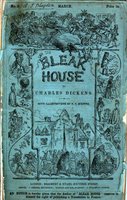
At the present moment (August, 1853) there is a suit before the court which was commenced nearly twenty years ago, in which from thirty to forty counsel have been known to appear at one time, in which costs have been incurred to the amount of seventy thousand pounds, which is A FRIENDLY SUIT, and which is (I am assured) no nearer to its termination now than when it was begun.
Charles Dickens, Preface to Bleak House (1853)

The case had been frequently before this court in various aspects; first, in 13 Peters, 404, then in 15 Peters, 9, 2 Howard, 619, 6 Howard, 552, 15 Howard, 473. In some of these reports large extracts are made from the record, illustrating the points of law and fact then under consideration, and also the evidence in support of them. All of this past history was brought again to the notice of the court in the argument of the present case, which cannot be again recited in the present report. The reader who wishes to understand all the points which are discussed in the opinion of the court must turn back to the preceding volumes above cited, and follow the case through its successive developments. He will then be able to appreciate the concluding remark in the opinion of the court, which is as follows:

"When hereafter some distinguished American lawyer shall retire from his practice to write the history of his country's jurisprudence, this case will be registered by him as the most remarkable in the records of its courts."
Gaines v. Hennen, 65 U.S. 553 (U.S. 1861) (reporter's note) (emphasis added).1
As he was writing Bleak House over the course of 1852 & 1853, Charles Dickens was aware of numerous cases mired for decades in the Courts of Chancery. Although his case of Jarndyce & Jarndyce was fiction, he knew the plodding reputation of the English courts at the time would make his case appear real to his 19th Century British audience.2

What Dickens probably did not know at the time, was that on this side of the Atlantic a woman named Myra Clark Gaines had already been pursuing a claim to an estate for almost twenty years.

What Dickens could not have known at the time was that the Gaines Case would continue for almost forty more years, becoming the longest case in the history of the U.S. judiciary. Her case, originally filed in 1834 would not be fully resolved until 1892, almost sixty years later.

Beginning with her first lawsuit in 1834 and culminating with New Orleans v. Whitney in 1891,3 the Supreme Court of the United States heard issues concerning the Gaines case an astounding sixteen times,4 and the Louisiana Supreme Court heard the case eight times.5

What was at issue in the Myra Clark Gaines Case?

For the answer, we turn to Elizabeth Urban Alexander's Notorious Woman: The Celebrated Case Of Myra Clark Gaines, a 300-page biography of Ms. Gaines published in 2001:
The events that formed the basis for the Gaines case began in 1787 when Daniel Clark arrived in New Orleans to join his uncle, Colonel Daniel Clark, in business. Ten years later, Colonel Clark conveyed all of his extensive property in Louisiana to his nephew, and at the age of thirty, Daniel Clark found himself one of the richest men in North America.

Clark's many business ventures brought him large revenues that he invested primarily in New Orleans real estate. During the early years of the nineteenth century, as he established himself in New Orleans as "a man of much personal pride and social ambition," Clark became romantically involved with a young Frenchwoman. All accounts of Zuileme Carrière emphasized her extraordinary beauty, vivacity, and charm, and both sides of the lawsuit admitted Clark's fascination with her.

Myra, daughter of Clark and Carrière, later came to believe that her parents had contracted a legal, though secret, marriage, making her the true heir to Clark's fortune. As she grew up, however, she was raised by friends of Clark and kept in ignorance of her real parentage as well as of her father's death in 1813, when she was nine.

Nearly twenty years afterward, Myra and her young husband arrived in New Orleans with a tale of a lost will and a claim that she was the true heir. Few believed her story. For the rest of her life, as a young wife and mother, as the third wife of a prominent general, and as a widow, Myra Clark Gaines pursued the vindication of her "rights."6
Besides its longevity, the Gaines case is legally interesting for a number of reasons. First and foremost, the Gaines case is a case about antebellum federal power — particularly about the scope of federal power in a state jurisdiction governed by civil law. Moreover, the case concerns the use of federal equity jurisdiction to govern a matter of domestic relations, an area where today's federal courts are loathe to exert their influence.7

Many of the appeals in the case reflect the reticence of courts sitting in Louisiana — even federal courts — to apply federal equity jurisprudence.8 The parties opposing Ms. Gaines (protecting the estate of her father) frequently argued before the court that equity had no place in Louisiana. In Gaines v. Chew, one of their many SCOTUS appeals, the estate administrators maintained that federal equity jurisprudence constituted "foreign law" inapplicable in the equity-free zone of Louisiana.9

In 1885, Ms. Gaines died, 6 years before the case came to its ultimate conclusion in her favor. After winning the final case before the U.S. Supreme Court the year before, on July 26, 1892, the administrator of her estate received a check for $923,788 from the city of New Orleans (which had received the Clark estate), ending the litigation.10 As you'd expect, creditors had significant claims against this sum, and little remained for the Gaines heirs to divide up.

If you want to know more about the Gaines case, I encourage you to check out Elizabeth Urban Alexander's Notorious Woman: The Celebrated Case Of Myra Clark Gaines or (if you don't want to leave the friendly confines of Westlaw or Lexis) check out Federalism's Fallacy: The Early Tradition of Federal Family Law and the Invention of State's Rights by Kristin L. Collins. 26 Cardozo L. Rev. 1761 (April 2005).


1 Justice James Moore Wayne – writer of the opinion cited by the above reporter's note – would die 6 years later in 1867, 24 years before the Myra Clark Gaines case would finally culminate in 1891.

2 Dickens not only succeeded in capturing the attention of a 19th Century British audience — he succeeded in capturing the attention of the modern U.S. judiciary. An unrestricted Westlaw search for "Jarndyce" among U.S. state and federal cases returns 254 results, including 3 SCOTUS references (most recently, Hartman v. Moore, -- U.S. ---, 126 S.Ct. 1695, 1701 (2006)

3 138 U.S. 595 (U.S. 1891)

4 U.S. Supreme Court Cases — Myra Clark Gaines
Ex Parte Whitney, 38 U.S. (13 Pet.) 404 (1837)
Gaines v. Relf, 40 U.S. (15 Pet.) 9 (1841)
Gaines v. Chew, 43 U.S. (2 How.) 619 (1844)
Patterson v. Gaines, 47 U.S. (6 How.) 550 (1848)
Gaines v. Relf, 53 U.S. (12 How.) 472 (1852)
Gaines v. Hennan, 65 U.S. (24 How.) 553 (1861)
Gaines v. New Orleans, 73 U.S. (6 Wall.) 642 (1868)
Gaines v. De La Croix, 73 U.S. (6 Wall.) 719 (1868)
Gaines v. Fuentes, 92 U.S. 10 (1876)
Smith, et al. v. Gaines, 93 U.S. 341 (1876)
Davis v. Gaines, 104 U.S. 386 (1881)
New Orleans v. Christmas, et al., 131 U.S. 191 (1889)
New Orleans v. U.S. ex rel. Christmas et. al.
, 131 U.S. 220 (1889)
New Orleans v. Whitney, 138 U.S. 595 (1891)

The district & circuit court cases involving Myra Clark Gaines are far too numerous to detail here, but information regarding them is available in the Bibliography of Elizabeth Urban Alexander's Notorious Woman: The Celebrated Case Of Myra Clark Gaines, the text of which is searchable at Amazon.com.

5 Louisiana Supreme Court Cases — Myra Clark Gaines
Barnes v. Gaines, 5 Rob. 314 (1843)
Succession of Clark, 11 La. Ann. 124 (1856)
Clark's Heirs v. Gaines, 13 La. Ann. 138 (1858)
De la Croix v. Gaines, 13 La. Ann. 177 (1858)
Van Wych v. Gaines, 13 La. Ann. 235 (1858)
Fuentes v. Gaines, 25 La. Ann. 85 (1873)
Foulhouze v. Gaines, 26 La. Ann. 84 (1874)

6 Elizabeth Urban Alexander, Notorious Woman: The Celebrated Case of Myra Clark Gaines 3 (2001)

If you're at Columbia Law School, the Arthur Diamond Law Libary has a copy of Notorious Woman available for checkout. Its call number is KF759.C57 A43 2001.

7 For a detailed analysis of the use of federal equity power in the Myra Clarke Gaines case, check out Federalism's Fallacy: The Early Tradition of Federal Family Law and the Invention of State's Rights by Kristin L. Collins. 26 Cardozo L. Rev. 1761 (April 2005)

8 Two of the Supreme Court appeals — Ex Parte Whitney, 38 U.S. (13 Pet.) 404 (1839) & Gaines v. Relf, 40 U.S. (15 Pet.) 9 (1841) — reversed lower federal courts sitting in Louisiana when those courts refused to apply equity to cases that they believed should have arisen under civil law, where equity was unavailable.

9 43 U.S. at 650 ("Complaint is made that the federal government has imposed a foreign law upon Louisiana. There is no ground for this complaint.").

10 The Gaines Case Settled; Some of the Claims to be at Once Paid by the Administrator, New York Times, July 27, 1892, at 1.

Labels: ,

Tuesday, October 17, 2006

Advice & Consent & Judge Janet T. Neff

Senator Sam Brownback (R-KS) is blocking the confirmation of Bush-nominated Judge Janet T. Neff, who currently sits on the Michigan Court of Appeals.

Senator Brownback's reason for holding up her nomination? Well, it seems that Judge Neff once attended a commitment ceremony for a lesbian couple.

Labels: ,

Thursday, October 05, 2006

CLS 12th Annual Supreme Court Round-Up

Columbia Law School
Social Justice Initiative Presents:

Twelfth Annual U.S. Supreme Court Round-Up

Wednesday, October 4, 2006

Participants:

Robert Garcia, Public Defender with the Neighborhood Defender Service of Harlem and a Special Litigator working with the NYU Community Defender Clinic

Thomas W. Merrill, Charles Keller Beekman Professor at Columbia

Michael Ratner, President of the Center for Constitutional Rights

Steven R. Shapiro, Legal Director of the ACLU

Overview “The First Year of the Roberts Court”

Professor Merrill opened the evening with a synopsis of the tumultuous transition and entrance of the two new justices. Cautious decisions and a more conciliatory demeanor on the court marked this period of transition. Later in the terms, a few more controversial and fragmenting decisions were levied. A honeymoon of sorts lasted throughout the term. The Supreme Court is such a unique institution, that it takes quite a long time for justices to get acclimated and become full players on the bench. More turnover of the Court’s lineup is likely: only Justice Thomas is under 67 of pre-Bush appointees.

Shapiro echoed Merrill’s general assessment, but comically pointed out Merrill’s failure to address the aborted Harriet Myer’s nomination. He too foresaw increasing divisiveness in the upcoming term, especially in two high-profile civil liberties issues: abortion and affirmative action. Both cases force the court to revisit issues decided fairly recently with 5-4 decisions. This puts Chief Justice Roberts in an awkward position as the Court’s novice leader: should his vote overrule such a recent precedent? Finally, Shapiro noted a center-ward shift in Rehnquist when he became Chief Justice, and wondered about a similar move for Roberts.

Michael Ratner- The Aftermath of Hamdan

Ratner began by describing the frustrations and complexity of his vantage point as a representative of Guantanamo detainees. “We are one vote away from tyranny,” he declared, invoking “tyranny in the Madisonian sense as the power of all three branches being practically vested in one individual.” Illegal wiretapping and the military commissions for enemy combatants were his prime examples of the accumulation of executive power. He then discussed the statutory issues at play in Hamdan v. Rumsfeld in detail, with the Court finding a narrow range of action for the executive in the formulation of military commissions. The most interesting repercussion of Hamdan is that it permits the application of language in the Geneva Conventions that was not directly at issue in the case, potentially to torture cases.

Shapiro chimed in, lauding the bar generally, as well as military lawyers, for stepping up to combat abuses of executive power and the deprivation of rights incidental to the “War on Terror.”

Thomas Merrill- A Look Ahead: Administrative Law and Other Important Cases

Merrill returned to his theme of the court in transition, using two voting rights cases as illustrations. First, he addressed Randall v. Sorrell, which dealt with campaign contributions law in Vermont. This case has reified the three-way split among the justices that has existed regarding the precedent in Buckley, both new justices residing in a center group and signing on to Justice Breyer’s plurality opinion in Randall. Moving to LULAC, the Texas redistricting case, Merrill pointed to the claim that mid-decade redistricting was an unconstitutional and partisan gerrymander. The court has never laid down a doctrine to assess political gerrymandering, and again, the two new justices aligned themselves in the centrist position of judicial restraint in deciding gerrymandering cases. Merrill opined that the presence of the two rookie justices in the center on these two cases is likely a place holding maneuver in the temperate spirit of newcomers on the court, and therefore not indicative of their potential future positions on similar legal issues.

Looking forward to the coming term, Merrill anticipated Massachusetts v. EPA as an important case on the standing of U.S. state attorney generals to challenge the federal government’s non-enforcement of the emission of greenhouse gasses. In Waters v. Wachovia Bank, a case for which Merrill contributed an AMICUS Brief may prove to be an important precedent determining the relationship between state statute and federal agency decrees.

Robert Garcia- A Look Ahead: Criminal Justice Cases

Garcia began with a discussion of Hudson v. Michigan as an unanticipated ruling that was questionably consistent with precedent. In a criticism of the narrow holding of the case, he suggested that the Court forgot about privacy. Garcia worried that the logic of this opinion could be used to eliminate the exclusionary rule of the 4th Amendment. Turning to more optimistic cases, Davis v. Washington and Hammon v. Indiana. These cases involved convictions without the ability to cross-examine the alleged victim. The Supreme Court stated that an ongoing emergency was an exception to the procedural rule mandating a right to confront adversarial witnesses.

Steven Shapiro- A Look Ahead: First Amendment and Other Important Cases

Shapiro began by announcing the score of the Mets-Dodges playoff game, and – in a further audience-friendly move – announced his intention to be brief and permit time for questions. Shapiro also commented on the Randall case, observing that the two new justices relied heavily on stare decisis in their voting. He then moved to LULAC case, and pointed to the issue of gerrymandering as the single largest hurdle to a more efficient federal electoral government. “Justice Kennedy has now become Justice O’Connor” as the critical middle of the court, proclaimed Shapiro, and considering his ongoing judicial evolution, he is the most interesting justice to observe. Kennedy, in the abortion and affirmative action cases, was in the dissent in precedents, so he will be torn between his commitment to stare decisis and his own prior votes. Shapiro worried about the repercussions of Gacetti v. Ceballos because that decision held that government employees have no right to free speech while under the auspices of their post. One potentially detrimental consequence of this decision is that public employees would be protected when revealing information to the press and public, but not when discussing issues with superiors or colleagues, creating a warped set of incentives for public officials.

In general, the session provided an excellent overview of the serious jurisprudential issues facing the current Supreme Court with an eye toward possible policy repercussions. The CLS ACS and all present thank and commend the Social Justice Initiative at Columbia for sponsoring and presenting this fantastic program.

Labels:

Monday, July 24, 2006

The Third Amendment: The Little Amendment That Couldn't

Stop what you're doing.

If you're a law student or a lawyer, the odds are pretty good that you're within easy walking distance of a copy of the U.S.C.A. Go to this multi-volume juggernaut.

The first umpteen volumes of this leather-bound behemoth are devoted to the U.S. Constitution and its amendments. Grab the volume dedicated to the first four amendments.

As you likely know, the U.S.C.A. is an annotated version of the codified statutes of the United States. Adjacent to a statute, the publisher (West) has attempted to include influential cases that reference that statute. Flip to the Third Amendment.

While flipping, you may have noticed that the First Amendment has about 150 pages of one-paragraph case synopses that illustrate how, over time, courts have interpretted the protections laid out in the First Amendment's 45 words.

If you flipped too far, you may have noticed the Fourth Amendment has about 400 pages of material dedicated to the constitutional protection against various unreasonable searches and seizures.

How many pages are devoted to the Third Amendment?

2

The republic is in its 230th year, with a constitution that is 217 years old. ...and yet there are 2 pages worth of cases that say anything interesting about the Third Amendment. Let's take a tour:

First, the text:
No Soldier shall, in time of peace be quartered in any house, without the consent of the Owner, nor in time of war, but in a manner to be prescribed by law.
Cornell's Annotated Constitution claims:
There has been no Supreme Court explication of this Amendment, which was obviously one guarantee of the preference for the civilian over the military. In fact, save for the curious case of Engblom v. Carey, 677 F. 2d 957 (2d Cir. 1982), on remand, 572 F. Supp. 44 (S.D.N.Y.), aff’d. per curiam, 724 F.2d 28 (2d Cir. 1983), there has been no judicial explication at all.
Au contraire. No fewer than seven cases have mentioned this sacred protective amendment, at least three of which bear mentioning.

First, back in the day of penumbras, a footnote in Katz v. US notes that this amendment protected at least one "aspect of privacy from governmental intrusion."1

Next, although the common law Ad Coelum rule (the rule's full name translates roughly as "To whomever the soil belongs, he owns also to the sky and to the depths.") was put out of commission 65 years before by Hinman v. Pacific Air Transport and its sister cases, the Custer County Action Association still forwarded an Ad Coelum-related theory in its 2001 case.2 The association claimed that peacetime military overflights were a per se unconstitutional quartering of soldiers on their property.3 Needless to say, the 10th Circuit disagreed rather heartily.

Finally, the last case bearing mention is Engblom v. Carey, which (as the quote above notes) is probably the only lengthy judicial discussion of the Third Amendment.4 Although I agree with Engblom's core holding, that National Guardsmen are "soldiers" within the meaning of the Third Amendment, I must sheepishly disagree with one of Engblom's other holdings — that the Third Amendment applies to the states via incorporation in the Fourteenth Amendment.5

Notwithstanding Barron v. Baltimore,6 it appears to me that the Third Amendment applies directly to state militias (given the National Guard's formation via the Militia Act of 1903, I'm treating them as state militias for the purpose of this argument.)

Article I, Section 10, Clause 3 reads:
No State shall, without the Consent of Congress, lay any Duty of Tonnage, keep Troops, or Ships of War in time of Peace, enter into any Agreement or Compact with another State, or with a foreign Power, or engage in War, unless actually invaded, or in such imminent Danger as will not admit of delay. (emphasis added)
Since a state could not maintain soldiers other than with the approval of Congress, since the Third Amendment says "No Soldier," not "no federal soldier," and since the Third Amendment provides a logical backstop to the militia power defined in the Second Amendment, it appears to me that the Third Amendment would have logically applied to the states before the Fourteenth Amendment made it so.


1 Katz v. US, 389 U.S. 347, 351 n.5 (1967).

2 Hinman v. Pacific Air Transport, 84 F.2d 755 (9th Cir. 1936); cert. denied, 300 U.S. 654 (1937); see US v. Causby, 328 U.S. 256, 261 (1946) (acknowledging that while a Fifth Amendment remedy might exist if flights over private property directly and immediately interfere with the enjoyment and use of the land, Congress has declared "[t]he air is a public highway" and "[c]ommon sense revolts at the idea" that aircraft operators would be subject to trespass suits based on common law notions of property ownership extending to the periphery of the universe). Black's Law Dictionary (6th ed 1990).

3 Custer County Action Ass'n v. Garvey, 256 F.3d 1024, 1042-43 (10th Cir. 2001).

4 Engblom v. Carey, 677 F.2d 957 (2d Cir. 1982), on remand 572 F. Supp. 44 (S.D.N.Y. 1983).

5 Id. at 961-62.

6 Barron v. Baltimore, 32 U.S. 243 (1833) (determining that the Bill of Rights did not apply to state governments).

(Thanks to Colin for the U.S.C.A. tip)

Labels: ,

ABA to Executive Branch: "The Constitution is not what the President says it is."

An ABA task force is urging Congress to pass legislation permitting court review of presidential signing statements.

Although the Justice Department claims that President Bush has only issued 110 signing statements (to Clinton's 80 such statements), the ABA task force cites research that Bush has challenged the constitutionality of 800 provisions of law passed by Congress.

Labels: , ,

Friday, April 14, 2006

Monday! Capitol Hill Staffers on Careers on the Hill and the Judicial Nomination Process

Social Justice Initiatives' Government Speaker Series

Monday, April 17
Jerome Greene 102
4-5 P.M. & 5-7 P.M.


Senior lawyer staff members of the US Senate Judiciary Committee from both sides of the aisle will be at Columbia on April 17th for two programs.


Preet Bharara – Senator Schumer (D, NY)
Helaine Greenfeld – Senator Leahy (D, VT)
Pete Jensen – Senator Spector (R, PA)
Jonathan Meyer – Senator Biden (D, DE)
Ajit Pai - Senator Brownback (R, KS)


Careers on the Hill
4-5 P.M.
Curious about what Congressional staffers do?
Interested in a summer or postgrad job?
This panel will provide answers to your questions.
Moderated by Dean Ellen Chapnick


Roundtable on the Federal Judicial Confirmation Process
5-7 P.M.
A thoughtful bipartisan exploration of the various needs served by the Constitutionally mandated procedure for appointing and confirming federal judges, the current process and alternatives that might be more useful and appropriate.
Moderated by Professor Gillian Metzger.


Co-Sponsered By
the Center for Public Interest Law,
the Columbia Chapter of the American Constitutional Society,
and the Columbia Chapter of the Federalist Society.

Labels: , ,

Saturday, April 08, 2006

U.S. News Law School Rankings: The Harriet Miers Effect

Although it did not surge forward as much as University of Denver's Sturm School of Law (from #95 to #70) or Seton Hall (from #83 to #70), Harriet Miers's JD alma mater, the Southern Methodist University, tied for 3rd largest positive gain in the rankings, moving up 9 slots from #52 to #43.

2007 U.S. News Rankings
2006 U.S. News Rankings

Click here to view older rankings.

Labels: ,

Monday, March 13, 2006

Illinois Senate Bill 2724: An Irrelevant Electoral College? (Part II)

(For Part I of this story and Andy's personal beef with the electoral college system, click here.)

Instead of personally characterizing Illinois Senate Bill 2724, I'll leave that task to Hendrik Hertzberg, who wrote about the bill for the New Yorker:
Here's how the plan would work. One by one, legislature by legislature, state law by state law, individual states would pledge themselves to an interstate compact under which they would agree to award their electoral votes to the nationwide winner of the popular vote. The compact would take effect only when enough states had joined it to elect a President — that is, enough to cast a majority of the five hundred and thirty-eight electoral votes. (Theoretically, as few as eleven states could do the trick.) And then, presto! All of a sudden, the people of all fifty states plus the District of Columbia are empowered to elect their President the same way they elect their governors, mayors, senators, and congressmen. We still have the Electoral College, with its colorful eighteenth-century rituals, but it can no longer do any damage. It becomes a tourist attraction, like the British monarchy.
The effort is called National Popular Election, and it has the support of The Center for Voting & Democracy, the leader in US election reform.

As the Per Curiam opinion in Bush v. Gore, 531 U.S. 98 (2000), notes, "the State legislature's power to select the manner for appointing electors is plenary; it may, if it so chooses, select the electors itself, which indeed was the manner used by State legislatures in several States for many years after the Framing of our Constitution." If this 6-year old statement even remotely reflects the current sentiment on SCOTUS, the National Popular Election effort would easily withstand constitutional scrutiny.

Here's hoping that enough states exercise this plenary power in such manner as to give voice to the will of the national electorate. The Illinois bill is currently in committee. Keep your fingers crossed. Your vote for the President may count soon enough.

Labels: , , ,

Illinois Senate Bill 2724: An Irrelevant Electoral College? (Part I)

Each State shall appoint, in such Manner as the Legislature thereof may direct, a Number of Electors, equal to the whole Number of Senators and Representatives to which the State may be entitled in the Congress.
Article II § 1.2
Growing up the son of two Democrats in the blood red state of Nebraska, I quickly developed a disdain for our electoral college system. Since Nebraska's electoral college votes have gone to the Republican candidate in every presidential election since Nixon in 1968, my parents' Democratic votes have never actually contributed to a winning candidate's total (never, except for my father's inexplicable 1972 Nixon vote, a ballot that will forever live in family infamy).


High school civics course arguments in support of the oft-criticized electoral college system generally cite the need to prevent the more populous states from luring Presidential campaign attention entirely away from less peopled states. (A final Nebraska anecdote: No system can prevent a state from falling off the map of a sitting President. Having previously visited the other 49 states, Nebraska was the last state visited by Bill Clinton during his presidency. Even then, he had to be lured into the state through the erection of one of the nation's sillier museums.)

But does this argument hold water? Hendrik Hertzberg points out in the New Yorker that the Presidential game (if ever fought in the small states) has moved to the battleground "purple" states:
In 2004, there were thirteen such states, accounting for twenty-eight per cent of the population (and thirty-two per cent of the ultimate vote, since turnout increases with the uncertainty of the outcome). In the final month, the candidates spent $237 million on advertising, $229 million of it in those thirteen states. (In twenty-three states, they didn’t spend a dime.) At the same time, President Bush, Vice-President Cheney, Senator Kerry, and Senator Edwards attended a total of two hundred and ninety-one campaign events. Two hundred and sixty-eight of them were in the lucky thirteen.
Even if arguments in favor of maintaining the electoral college status quo are less than compelling, the strongest argument that the electoral college system is here to stay has always been the difficulty in changing our system of electors. Amending the US Constitution to enable the direct election of the President would require a 2/3rd vote of both houses of Congress and then ratification by "three fourths of the several States."

As power shifts from party to party, neither side could be relied on to provide support consistent enough to clear this high hurdle for reform. As the New Yorker article notes, Bush may have been a big fan of the electoral college in 2000, when he became the first person since Benjamin Harrison to win the Presidency and lose the popular vote; however, he probably held the electoral college in considerably less esteem in 2004, when despite his clear margin in the popular vote, he nearly lost to John Kerry but for 60,000 votes in Ohio.

Of course, all of the above is old news to you.

The new news is that a bill was introduced in the Illinois Senate on January 20th that could all but render the electoral college moot. The bill's chances of passage look strong, it appears constitutional, and it eliminates the electoral college's anti-democratic nature without requiring an amendment.

If Illinois Senate Bill 2724 is passed, and if companion bills pass in 10 other states (CA, TX, NY, FL, PA, OH, MI, GA, NJ, NC), then – without possibility of exception – the winner of the popular vote will be the winner of the presidential election.

(Read Part II of this story to learn about Illinois Senate Bill 2724)

Labels: , , ,